
Intro
Welcome to my alpine hiking notes as a beginner. This post shares essential tips, gear recommendations, and lessons learned from hiking around Bavaria’s beautiful alpine regions.
The Alps offer stunning views and rewarding trails, but they also present unique challenges for beginners. Proper preparation, respect for the environment, and understanding your limits are key to safe and enjoyable hiking.
Essential Tips
Before You Go
- Start early: Begin your hike early in the morning to avoid afternoon thunderstorms and have plenty of daylight
- Check the weather: Alpine weather can change rapidly; always check forecasts and be prepared to turn back
- Know your limits: Choose trails appropriate for your fitness level and experience
- Tell someone: Share your route and expected return time with friends or family
On the Trail
- Pace yourself: Alpine hiking is demanding; maintain a steady, sustainable pace
- Stay hydrated: Drink water regularly, even if you don’t feel thirsty
- Follow trail markers: Stick to marked trails and respect closures
- Leave no trace: Pack out all trash and respect wildlife
Gear Recommendations {#gear}
Must-Have Items
- Sturdy hiking boots with ankle support
- Layered clothing (base layer, insulating layer, waterproof shell)
- Hat and sunglasses for sun protection
- 2-3 liters of water
- High-energy snacks (nuts, dried fruit, energy bars)
- First aid kit with blister treatment
- Map and compass (or GPS device with downloaded maps)
- Emergency whistle
- Headlamp with extra batteries
Weather Considerations
Alpine weather is unpredictable. Even on sunny days:
- Bring a rain jacket and warm layer
- Start with fewer layers and add as needed
- Be prepared for temperature drops at higher elevations
Trail Safety
Common Hazards
- Altitude: Take time to acclimatize; headaches and fatigue are signs to descend
- Weather changes: Watch for dark clouds, increasing wind, or temperature drops
- Wildlife: Keep distance from animals; don’t feed wildlife
- Steep terrain: Use trekking poles for stability on descents
Emergency Procedures
- European emergency number: 112
- Mountain rescue: Note your location (GPS coordinates if possible)
- If lost: Stay calm, find shelter, make yourself visible
- In case of injury: Apply first aid, call for help, don’t continue unless necessary
Recommended Beginner Trails (Bavaria)
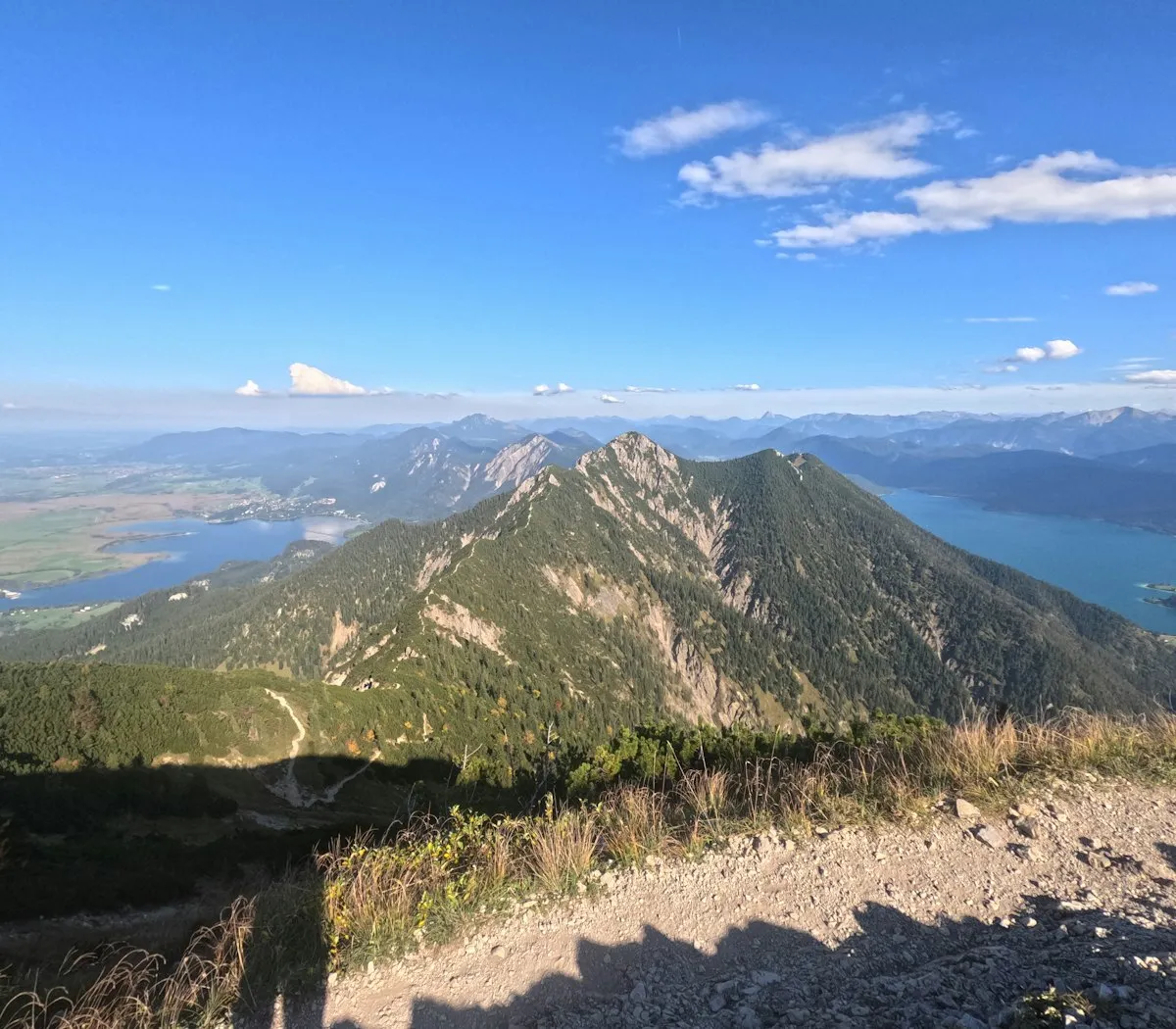
- Herzogstand: Moderate climb with spectacular views of Walchensee and Kochelsee
- Wallberg: Accessible via cable car with options for summit hikes
- Blomberg: Family-friendly with well-maintained trails and mountain huts
Happy hiking! Remember: The mountain will always be there tomorrow. It’s okay to turn back.